
Casinos and Google Pay in Australia: What Acceptance Means
 Available in AU
Content
The page distinguishes everyday mobile-wallet use from verified casino support, and explains why deposit and withdrawal options may differ.
Australia’s Wallet Habit—and Its Limits
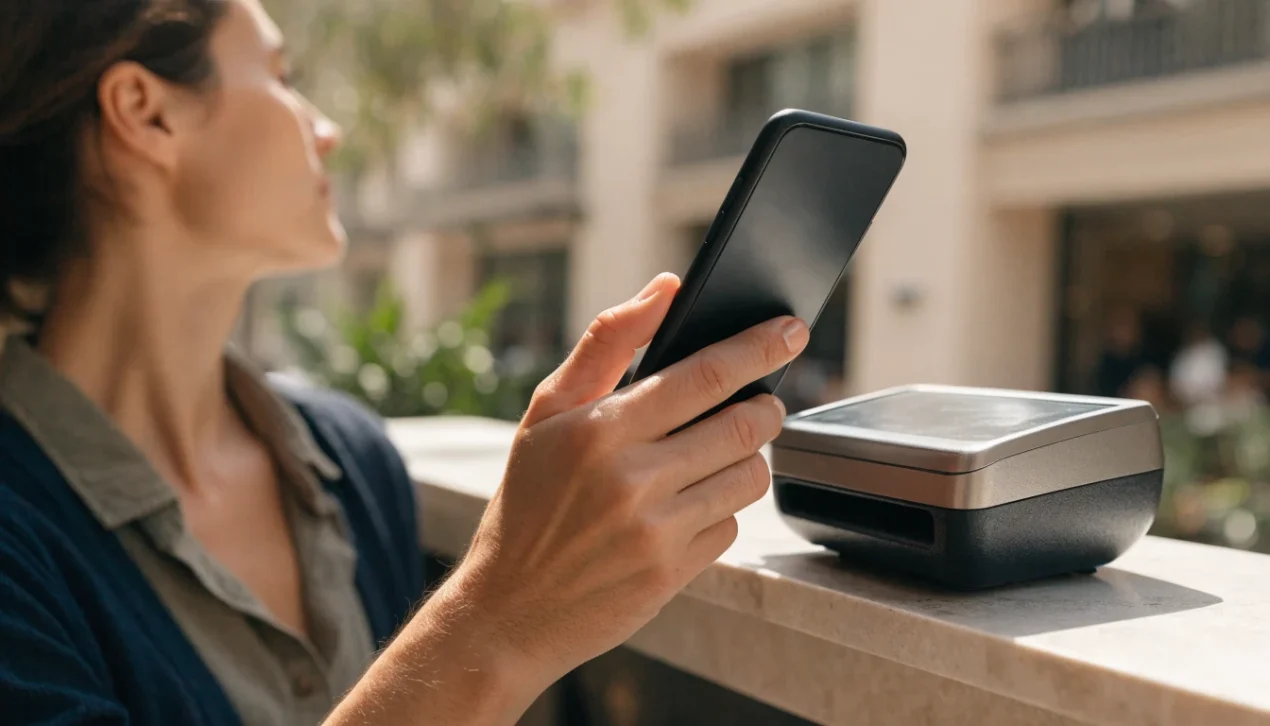
In Australia, tapping a phone to pay has become part of the ordinary choreography of buying things. A contactless card is familiar enough to require little thought; a mobile wallet can occupy the same practical place, turning a device already carried for other reasons into a way to pay. Google Pay and Apple Pay are accepted almost everywhere in the country, as are contactless credit and debit cards. The habit is not confined to people committed to one particular way of paying. Australian consumers move among cards, mobile wallets and bank-linked services such as PayPal with relative ease.
That flexibility says something about everyday payment culture. A wallet is no longer necessarily a folded object with cards inside it. It can be a card held by a phone, a service connected to a bank, or the physical card itself, chosen according to the moment. The point is less loyalty to a brand than an expectation that familiar forms of payment will be available where ordinary purchases happen. Convenience has become a quiet standard.
Google Pay availability can vary by casino and payment terms, so check the cashier before depositing. This list offers a starting point for reviewing the available operator details.
1. Roby Casino
License: Curacao eGaming (Roby Games Ltd)
Roby Casino is listed with a Curacao eGaming licence held by Roby Games Ltd.
2. Rollero Casino
License: Curacao Gaming Control Board OGL/2023/176/0095 (Hollycorn N.V.)
Rollero Casino is listed under a Curacao Gaming Control Board licence, OGL/2023/176/0095, held by Hollycorn N.V.
3. GoldenCrown
License: Curacao Gaming Control Board OGL/2023/176/0095 (Hollycorn N.V.)
GoldenCrown is listed under a Curacao Gaming Control Board licence, OGL/2023/176/0095, held by Hollycorn N.V.
4. DragonSlots Casino
License: Curacao Gaming Authority (Jumpman Gaming Ltd)
DragonSlots Casino is listed with a Curacao Gaming Authority licence held by Jumpman Gaming Ltd.
5. Uptown Pokies
License: Curacao (operating since 2017) · Min. deposit: A$20
Uptown Pokies has operated since 2017 and is listed with a Curacao licence. Its minimum deposit is A$20.
6. House of Pokies
License: international iGaming licence – jurisdiction not named in the source · Payout speed: PayID 1-24 hours · Min. deposit: A$30 (PayID from A$10)
House of Pokies lists an international iGaming licence, though the source does not name the jurisdiction. PayID payouts are stated as taking 1–24 hours, and the minimum deposit is A$30, or A$10 via PayID.
7. Vegaz Casino
License: Curacao OGL/2024/1335/0780 · Min. deposit: EUR 20
Vegaz Casino is listed with Curacao licence OGL/2024/1335/0780. Its minimum deposit is EUR 20.
8. MrPacho
Payout speed: crypto 30-120 minutes, fiat 24-72 hours · Min. deposit: A$30
MrPacho lists crypto payouts in 30–120 minutes and fiat payouts in 24–72 hours. Its minimum deposit is A$30.
9. Ricky Casino
Payout speed: crypto under 1 hour, PayID 1-3 business days · Min. deposit: A$20 (A$30 to qualify for the bonus)
Ricky Casino lists crypto payouts in under an hour and PayID payouts in 1–3 business days. The minimum deposit is A$20, or A$30 to qualify for the bonus.
10. Thor Casino
License: Curacao – Antillephone N.V. (Versus Odds B.V.) · Min. deposit: EUR 20
Thor Casino is listed with a Curacao licence held by Antillephone N.V. (Versus Odds B.V.). Its minimum deposit is EUR 20.
But a habit formed at shops, cafés and other everyday points of sale does not automatically travel into every online setting. The word “accepted” can sound reassuringly broad, as though one payment environment were simply an extension of another. In practice, the general presence of mobile wallets in Australian life establishes only that people know and use them. It does not establish that a particular online service offers the same option, or that a wallet behaves identically across different kinds of transactions.
That distinction matters when the subject is an Australian online casino and Google Pay. The ordinary familiarity of the wallet is real; the inference from that familiarity to a specific casino’s checkout is not. A phone may be used to tap at a shop counter without telling anything about which payment choices appear on a separate online cashier. The technology may share a name and sit on the same device, but the setting has changed. Everyday acceptance is context, not confirmation.
There is a small cultural sleight of hand in the phrase “mobile payment.” It gathers very different arrangements under one convenient label. A contactless card and a phone wallet can look similar at the moment of purchase, while a bank-linked service works through a different relationship between the customer and the merchant. For people paying ordinary household or retail costs, these distinctions may matter only when something fails or a preferred option is absent. For a claim about a particular online checkout, they matter from the start.
This is why national payment habits can be useful without being decisive. They explain why a person in Australia might expect to see Google Pay among familiar ways to pay online: the wallet is already part of the wider landscape. They do not prove that an individual site supports it. Nor does familiarity with Apple Pay, cards or PayPal fill in that gap. One cannot infer a service’s available options from the popularity of the device or payment category around it.
Casinos That Accept Litecoin in Australia: What to Check
The distinction also resists a common kind of shorthand. “Australian” can describe the people, the market being discussed, or the place where a payment is attempted. Those meanings are not interchangeable. A payment method used widely in Australia remains a general-purpose tool; its everyday standing does not itself certify how a specialised online service is set up. The same national environment can contain familiar consumer habits and very different arrangements at individual checkout points.
Wallets do have a social appeal beyond speed or convenience. They reduce the friction of carrying several payment choices in one place, and they make switching between those choices feel ordinary rather than exceptional. That ease can encourage an assumption that the infrastructure is seamless everywhere. Yet seamlessness is often a surface impression: the consumer sees a familiar symbol, while acceptance depends on the setting in which it appears. A logo is not a map of every transaction it can serve.
So the Australian wallet habit is a useful starting point for understanding why Google Pay is a familiar name, not a shortcut to certainty about online casino payments. Contactless cards and mobile wallets have a broad everyday presence, and people are accustomed to moving between digital and bank-linked options. Those facts describe the surrounding culture of payment. They cannot stand in for evidence about a particular checkout.
Familiarity travels. Acceptance does not necessarily follow.
What a Google Pay Deposit Would Need to Establish
A Google Pay deposit is not established by seeing the wallet in daily use, or by knowing that a phone can make contactless payments. For an online transaction, the relevant evidence would be specific to the service and the point in the account process where money is being added. A payment method can be common in shops and still be absent from a particular online cashier.
The distinction matters because “accepts Google Pay” can mean several different things in casual descriptions. It might refer to a wallet logo on a general payments page, a payment option displayed to some customers, or a method actually available when an account holder opens the cashier to fund an account. Those are not interchangeable. For a deposit claim, the pertinent question is whether Google Pay appears as an available choice at that stage, for the account and location concerned.
Casinos That Accept PayID in Australia: What to Check
Even that would establish only a method, not every condition attached to it. A cashier could show Google Pay while presenting its own rules for eligible cards, currencies, account status or transaction amounts. The amount available for a particular deposit would need to be displayed in that transaction flow. A phrase such as “small deposits accepted” cannot establish a specific minimum, and neither a wallet’s general functionality nor a logo can confirm that a particular amount will be permitted.
This is where a request framed around a ten-dollar deposit needs careful reading. The number in the phrase is a desired amount, not proof that any cashier supports it. The answer would depend on the options and terms shown for the particular transaction. Without those details, neither acceptance of that amount nor the existence of a special Google Pay minimum can be inferred. It is a modest distinction, but money has a way of making modest distinctions expensive.
The deposit process also involves more than the wallet interface. Online gambling accounts are commonly subject to identity checks before financial transactions can take place. Such checks are generally described as Know Your Customer assessment: the operator verifies information associated with the account before allowing financial activity. A payment option appearing in a cashier therefore does not, by itself, mean the account is ready to use it. Verification status and payment availability are separate conditions.
A sound deposit claim would need to connect those pieces rather than blur them together: the cashier must present Google Pay as a funding choice; the terms must explain what amount can be submitted; and the account must meet the service’s stated verification requirements. The transaction itself would then have to be accepted by the payment chain. A displayed option is evidence of availability at that moment, not a guarantee that every attempted payment will be approved. The wallet, the card or funding source behind it, and the receiving service each have a part in the process.
Do
- Verify if Google Pay is available in the actual cashier
- Check the specific minimum deposit amount required
- Ensure your account meets all verification requirements
Don’t
- Assume a wallet logo guarantees transaction approval
- Rely on a general “small deposits accepted” claim
- Infer payment availability from daily shopping habits
The phrase “best casino for Google Pay deposits” carries a further problem. “Best” is not a payment fact. It can suggest a ranking based on speed, fees, minimums or reliability, but those qualities require separate, current evidence. A list of names cannot answer whether the cashier actually offers Google Pay to an Australian account, what conditions apply, or whether the desired amount is accepted. Nor does a polished payment page settle those questions. Clarity of presentation is not proof of performance.
There is also a legal boundary around the subject in Australia. The Interactive Gambling Act 2001 prohibits operators from providing real-money online casino games to people in the country. The Australian Communications and Media Authority enforces that law, and Australian consumer law does not protect people who use offshore casinos. Payment information should not be mistaken for an endorsement or an invitation to fund such an account.
For that reason, the useful meaning of “deposit by Google Pay” is narrow. It describes a funding route only if the cashier makes that route available and states the conditions for using it. It does not establish a particular deposit amount, account eligibility, payment approval or the legality of the service. Everyday familiarity with a wallet cannot fill those gaps. Only transaction-specific information could.
Acceptance Claims Without a Verified Operator List
A statement that a casino accepts Google Pay sounds definite. In practice, the wording can conceal several different claims: that a payment brand appears on a page, that an operator has mentioned it, or that the option is available in the cashier for a particular customer. Those are not interchangeable forms of evidence.
The distinction matters because acceptance is not a quality ranking. A site could display a wallet logo without showing whether it is currently supported for Australian accounts. A third-party description might repeat an older payment list, or use “Google Pay casino” as a broad label for a site discussed alongside the service. Neither wording, by itself, establishes what happens at checkout.
Casinos That Accept POLi in Australia: What to Know
A useful claim is narrow enough to be tested. It identifies the operator, the country or customer group in question, and the particular payment function being described. It also makes clear whether the information comes from the operator’s own cashier or from a separate review. Without those details, “accepts Google Pay” is closer to a headline than a confirmed transaction fact.
The same caution applies to superlatives. “Best” may refer to a reviewer’s preference, a commercial ranking, a selection of sites with a particular feature, or simply a phrase chosen to attract attention. Unless the criteria are stated, the word tells little about how the selection was made. A ranking cannot turn uncertain acceptance into verified acceptance; it only arranges the claims.
There is a further problem with lists that combine unlike evidence. One entry may be based on an operator’s current payment information, another on a review, and another on an unqualified logo. Presented in a uniform format, they can appear equally reliable. The layout does the persuading before the evidence has earned it.
A more careful account would separate three questions. Is Google Pay named as a supported method? Is that statement specific to Australian customers? Is the claimed availability current and tied to the actual service being described? A yes to one does not supply the other answers. Familiarity with mobile wallets in everyday Australian payments cannot fill the gap: broad use of a payment method says nothing conclusive about an individual casino’s arrangements.
Nor should a payment label be treated as a general endorsement of a site. It says nothing, on its own, about the accuracy of the rest of a review, the operator’s suitability, or the terms that govern a transaction. Payment information is a small piece of a larger picture, and even that small piece needs a clear basis.
BPAY Casino Sites in Australia: What Is Verified
This leaves a modest standard for reading acceptance claims: prefer precise wording over sweeping labels, distinguish operator information from commentary, and treat rankings as opinions unless their method is transparent. Where a claim cannot be tied to a specific service and customer context, its limits should remain visible rather than being smoothed away by confident presentation.
A logo is not a record of a completed transaction. Nor is a list.
Why ‘Instant’ Withdrawals Need More Than a Wallet Logo
A Google Pay logo beside a cashier’s deposit options says little about how winnings can be paid out, let alone how quickly they might arrive. The word “instant” belongs to a particular transaction and its full route, not to a wallet in the abstract. A deposit can be authorised promptly while a withdrawal follows a separate review and payment process. The two movements share an account, perhaps, but not necessarily a timetable.
That distinction matters in searches for instant Google Pay withdrawals from Australian casino sites. The label may suggest that a familiar tap-to-pay service can also return winnings at once. Yet a payment option shown for adding funds is not evidence that the same option is available for cashing out. Nor does it establish when a withdrawal would be approved, processed or received. A logo is a small piece of evidence asked to do an unusually large job.
“Instant” can also blur several different stages. An operator might review a request before releasing it; a payment provider and the receiving bank may then have their own processing steps. Without information about the actual withdrawal route and each stage, the adjective describes an expectation, not a demonstrated outcome. A casino page can use the word prominently while leaving the practical meaning unclear.
The comparison with Amex shows why payment claims need to be read narrowly. A specialist review reports that Amex withdrawals from casinos can take as long as five days to clear. That is a claim about Amex, not Google Pay, and it should not be transferred from one method to another. The same kind of review notes that some Australian online casinos do not permit withdrawals to Amex. These details are not a forecast for every operator; they illustrate that a payment method’s presence does not settle the withdrawal question.
CashtoCode casinos in Australia: what to verify
A request for an “instant” payout therefore calls for more than a method name. The relevant detail is whether the operator says that winnings can be sent through Google Pay at all, and what it means by processing or arrival time. Those terms can refer to different points in the transaction. Where the distinction is not made, a headline cannot fill it in.
The word “best” adds another layer of judgment, but speed alone cannot support it. A claim about a new site or a no-deposit offer does not establish a Google Pay cash-out route either. These are separate claims, each requiring its own clear terms. A promotional label is not a payment record.
There is no sound basis for treating Google Pay as an instant withdrawal method merely because it appears in a cashier. The careful reading is less dramatic: a wallet logo may indicate an option for one kind of transaction, while the return of winnings remains a separate matter. Instant, unless defined and tied to that route, is just an adjective.
The Legal Boundary Behind Offshore Casino Claims
A payment label can make an online service sound ordinary. Google Pay is familiar in Australian shops; a casino cashier displaying the same name would still sit inside a very different legal category. The method of payment does not change the law governing the service.
Under the Interactive Gambling Act 2001, operators must not provide real-money online casino games to people located in Australia. That prohibition covers casino-style services offered across a border as well as those presented as local. Calling an operator offshore describes where it is based; it does not create an exception for offering the service to Australians.
EcoPayz casino sites in Australia: legal context
The law draws its main line around the operator’s conduct. It does not explicitly make an individual player’s use of an offshore casino a criminal offence. That distinction matters, but it is not an endorsement or a guarantee of safety. The Australian Communications and Media Authority (ACMA) has the enforcement role under the Act, and offshore gambling services are subject to blocking and enforcement measures. A website being visible, or a payment option being named, does not establish that its operation is lawful.
There is another boundary that can disappear in the language of online reviews: Australian consumer law does not protect people using offshore casinos. A familiar interface, Australian-dollar wording or a recognisable wallet logo does not bring an overseas operator within the protections available for domestic consumer transactions. If a dispute arises over an account or a payment, the appearance of local convenience should not be mistaken for local recourse. Familiarity is not jurisdiction.
This is why claims about casinos that accept Google Pay in Australia need to be read as claims about a payment feature, not as proof that an operator may lawfully offer casino games to Australians. A cashier can describe how an operator proposes to take funds; it cannot settle the legal status of the service. Nor does a payment brand’s presence amount to approval of the gambling activity. These are separate questions, often compressed into one neat logo.
Australia’s framework is less concerned with making offshore casino services look safer than with restricting operators from supplying them to people in the country. The distinction between the operator’s prohibition and the player’s position can sound unusually fine, but it has practical weight: the absence of an explicit player offence does not confer consumer protection, convert the service into a lawful domestic one, or make access dependable. The border is legal, not decorative.
Search phrasing may ask for a casino that takes Google Pay; the law asks a prior question about the service itself. Those questions should not be collapsed. Payment acceptance is a technical claim. Legal permission is a different matter. And a wallet logo cannot answer it.
Legal Risks
Under the Interactive Gambling Act 2001, operators are prohibited from providing real-money online casino games to people in Australia, and consumer law does not protect users of offshore casinos.
A Payment Method Is Not a Casino Game
A payment label and a game catalogue belong to different parts of a service. Google Pay, where a merchant accepts it, is a way to make a payment. It does not describe what that merchant sells, and it cannot establish that a particular online casino supports the wallet.
The distinction can get blurred in phrases such as “casino games with Google Pay”. Grammatically, the words sit together; practically, they point to separate questions. One concerns the form of payment. The other concerns the games offered by a site. Neither answer can be inferred from the other.
Mobile wallets, including Google Pay and Apple Pay, are accepted almost everywhere in Australia in ordinary commerce. That familiarity may make the wallet seem like a natural part of any online checkout. But broad use in shops and other services is not evidence of acceptance by a particular gambling site. A familiar logo can travel far without settling the terms of a specific transaction.
Nor does a payment method select or alter a game. If a service offers a catalogue, its contents are determined by the service, not by whether a customer can pay through a wallet. Searching for an association between Google Pay and casino games does not turn the wallet into a feature of those games. It remains a payment instrument, if accepted at all.
This matters because labels on payment pages can do more work than they deserve. A mention of Google Pay might refer to general wallet availability, a cashier option, or simply a broad description of digital payments. Without specific confirmation for a particular service, none of those meanings should be treated as proof that a casino transaction can be completed that way.
Casinos That Accept Neteller in Australia: What to Check
The reverse is just as important. A service’s games, where such a catalogue exists, do not prove that Google Pay is accepted. Payment support and game availability are independent details, and one does not certify the other.
The word “mobile” can add another layer of confusion. A mobile casino may mean a site viewed on a phone; it does not mean that every mobile wallet works there, or that the wallet determines what appears on screen. The device, the payment method and the service’s contents are separate things. Three labels, not one.
Slots and Payment Claims: Keep the Categories Separate
A payment label and a game category answer different questions. Google Pay describes a way money might be handled; “slots” describes a type of casino-style game. Putting the terms together does not establish that a particular service accepts the wallet, offers a particular game, or can lawfully provide that game to someone in Australia.
That distinction matters because a familiar payment brand can lend an air of ordinary commerce to a claim that is anything but ordinary. A cashier listing, where one exists, concerns transactions. It is not evidence about a site’s games, and a games menu would not prove that Google Pay is available for payments. The categories do not certify one another.
Australian law draws a sharper boundary around the game side. The Interactive Gambling Act 2001 bars operators from supplying real-money online casino games, including slots, to people located in Australia. A wallet logo cannot alter that rule. Nor does describing a site as a “Google Pay slots” destination turn the description into evidence of lawful availability. The wording is a label, not permission.
Payment support and game availability are independent details; a site’s game catalogue does not prove that Google Pay is accepted for payments.
Bonus language belongs in yet another category. A reference to a casino bonus alongside Google Pay does not establish that a bonus exists, that it applies to a payment method, or that it may be advertised to an Australian audience. Promotions are subject to restrictions, and real-money online casino advertising is not made acceptable by attaching a payment option to the claim. A small distinction with large consequences.
The same care applies to lists. A list labelled as casinos accepting Google Pay would need reliable, current evidence about payment acceptance; it would not, by itself, verify slot access or bonus terms. And in Australia, presenting such a list as an invitation to play would cross the line from describing payment terminology into promoting prohibited online casino services.
So the phrase joining slots and Google Pay can be read only as an attempted combination of two separate ideas. It cannot establish an operator’s checkout arrangements, a game catalogue, a bonus, or lawful access from Australia. The payment method remains a payment method. The legal boundary remains the boundary.
Withdrawal Routes Are Not the Same as Deposit Routes
A payment method shown for adding funds does not, by itself, establish that winnings can be sent back through it. A cashier may treat incoming and outgoing transactions differently: the route used to fund an account is not necessarily available for a withdrawal. The distinction matters whenever a payment label is mistaken for a complete description of how money moves.
Google Pay therefore cannot be assumed to work as a withdrawal route merely because a casino displays it for deposits. A Google Pay withdrawal claim would need to refer specifically to outgoing payments and explain the conditions attached to them. A logo, a deposit option or a general statement that a site accepts a wallet answers a narrower question. It says little about the return journey.
American Express offers a documented illustration of the difference, though it is not evidence about Google Pay. A specialist review describes casino withdrawals through Amex as requiring an earlier deposit with that card. The same kind of review notes that some Australian online casinos may not permit withdrawals to Amex at all. Those reports concern a particular payment method and should not be treated as a rule for every operator, or as a guide to Google Pay.
Osko Casino Sites in Australia: What Can Be Verified
The practical distinction is between funding an account and receiving money from it. The cashier’s listed deposit methods may not match its withdrawal options, and a method’s presence in one part of the process does not settle its role in the other. For any claimed online casino withdrawal through Google Pay, the relevant information would be the operator’s stated withdrawal methods and terms, not simply a payment badge near the deposit controls.
That distinction also resists a familiar piece of digital shorthand: one route in, therefore the same route out. Financial systems rarely owe such symmetry. In gambling, where the service itself is prohibited for operators offering real-money casino games to people in Australia, the payment label does not change the legal position. Australian consumer law does not protect people using offshore casinos.
The route back is a separate matter. A deposit icon cannot promise it.
Australian Payment Preferences, Not Proof of Casino Acceptance
Australian consumers are accustomed to moving between cards, mobile wallets and services connected to bank accounts, such as PayPal. That flexibility is part of ordinary payment life: the method chosen can depend on what is at hand, what a merchant supports and how a transaction is arranged. Familiarity with a wallet, however, says nothing decisive about whether a particular online gambling cashier accepts it.
This distinction matters because the phrase “Google Pay at an Australian casino” can sound like a settled category, when it is really a claim about a specific operator’s checkout. A wallet’s everyday presence in Australia does not confirm that it appears among a casino’s payment options, that it works for Australian customers, or that a transaction will be approved. Those are separate questions, and consumer habit cannot answer them.
Cards also do not form a single, interchangeable category. A specialist review has suggested that Visa may be accepted at more Australian online casinos than American Express. That is a qualified observation from one kind of source, not a permanent map of the market: payment menus can change, and an operator’s available methods may differ from another’s. The comparison says nothing by itself about Google Pay.
Casinos That Accept Mastercard in Australia: Key Limits
There is a social detail in this switching. Payment systems are designed to make choice feel routine, while businesses decide which routes to keep open. The visible ease of tapping a phone can therefore obscure the less visible decision made at the cashier. Convenience in shops is not a passport into every online service.
For the same reason, reports that Australians use mobile wallets widely should not be turned into a list of casinos supposedly accepting Google Pay. A claim about an Australian casino using Google Pay needs evidence tied to that operator and its actual cashier, rather than an inference from national payment preferences. Without that distinction, “widely used” quietly becomes “accepted here”—a small leap, but still a leap.
What the Phrase ‘Google Pay Casino’ Can—and Cannot—Mean
“Google Pay casino” is a compact label, but it can blur several different claims. It might refer to a site displaying Google Pay among payment methods, a wallet being available in a cashier, or a completed transaction. Those are not interchangeable. A logo or general statement about wallet support does not establish that a particular casino transaction can be made.
The distinction matters in Australia, where Google Pay and Apple Pay are familiar in everyday commerce and accepted almost everywhere. That broad presence describes ordinary retail payments; it does not verify support by an online gambling operator. A phrase such as “Google Pay accepted” is only meaningful when tied to a specific service and its actual terms. Without that connection, it remains a label, not evidence.
Nor does the word “payout” settle the question. It may be used loosely to suggest money moving through a wallet, but the phrase alone says nothing reliable about whether a casino can send funds that way. Payment language often compresses separate stages into one reassuring badge. Compression is not confirmation.
Account checks form another part of the picture. Online casinos commonly ask customers to complete identity checks before handling financial transactions. That requirement concerns the account holder’s verification; it does not prove that Google Pay is supported or that a wallet label describes every transaction route.
There is also a boundary that promotional shorthand tends to leave out: Australian consumer law does not protect people using offshore casinos. A payment brand’s familiarity cannot supply that protection, establish the operator’s status, or change the legal position of online casino services in Australia.
So the phrase can identify a topic worth distinguishing: a mobile wallet on one side, a casino transaction on the other. It cannot, by itself, certify acceptance, explain the scope of support, or make a financial service legitimate. Labels travel lightly. Responsibilities do not.
What are the deposit and withdrawal limits at the best Amex casinos?
Limits are set by each casino and can vary. Check the casino’s cashier for the limits that apply to your account.
Are there any fees for depositing with American Express?
Amex deposits typically have no fee, but a casino may charge a 1.5% surcharge, and Amex cards incur a 3% currency conversion fee. Withdrawal fees may also apply.
Can I withdraw winnings directly to my American Express card?
Some casinos allow Amex withdrawals, but not all do, and you generally need to have deposited with Amex first. Withdrawals can take up to five days to clear.
Are casino Amex payments instant?
Amex deposits are processed instantly. Withdrawals can take up to five days to clear.
Which online casinos accept American Express for deposits?
Jackpot City Casino, Spin Palace, Ruby Fortune, Ignition Casino, Joe Fortune and PlayAmo support Amex deposits for Australian players.
How do you check if casino sites accept Amex deposits?
Open the casino cashier and check whether American Express is offered as a deposit option for your account. If it is available, select it, enter your card details and the deposit amount in AUD, then submit the payment.
Related posts

Real-Money Casino Table Games in Australia

Pokies Tips and Tricks: What Can Actually Change
