
Casino in Tasmania: Stays, Services and Access
 Available in AU
Content
A practical guide to hotel arrangements, gaming access and venue services, with a clear distinction between available information and unconfirmed details.
A Stay at the Casino: What the Available Information Can—and Cannot—Establish
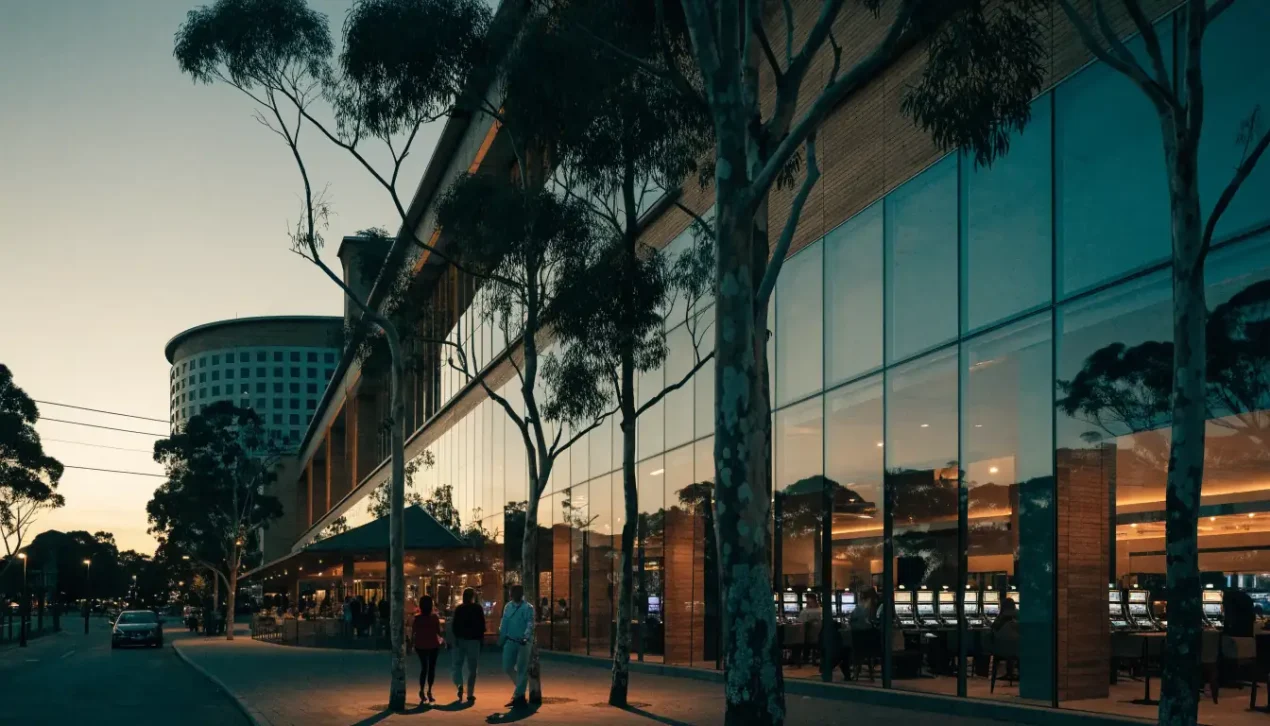
A casino hotel can mean a hotel inside the same complex as a gaming venue, a property connected by a covered walkway, or simply a hotel marketed alongside a casino visit. Those arrangements may sound interchangeable in a short listing. They are not. The distinction affects whether a guest can move between the room and venue without going outdoors, whether the hotel and casino share facilities, and which business is responsible for the booking.
For a stay in Tasmania, the phrase “casino hotel” should therefore be treated as a description to clarify, not a guarantee of a particular layout. A property’s name, promotional wording or association with a casino does not, by itself, explain whether the hotel is on the same site or what services are part of the room rate. The useful detail is practical: what the booking includes, where the guest checks in, and how the hotel is physically related to the casino.
Room descriptions deserve the same care. “Room” is a category, not a specification. A booking page might distinguish rooms by bed arrangement, outlook, accessibility or included facilities; those labels matter more than a broad promise of a casino stay. The exact room type selected should appear on the reservation, with any conditions attached to it clear before payment. A photograph can suggest an atmosphere. It cannot establish what has been booked.
Choosing a casino for Tasmania in 2026 means checking the details that matter to you, such as licensing, payment options and minimum deposits. This list offers a concise reference to the information available for each operator.
1. Roby Casino
License: Curacao eGaming (Roby Games Ltd)
Roby Casino is listed with a Curacao eGaming license held by Roby Games Ltd.
2. Rollero Casino
License: Curacao Gaming Control Board OGL/2023/176/0095 (Hollycorn N.V.)
Rollero Casino is listed under Curacao Gaming Control Board license OGL/2023/176/0095, held by Hollycorn N.V.
3. GoldenCrown
License: Curacao Gaming Control Board OGL/2023/176/0095 (Hollycorn N.V.)
GoldenCrown is listed under Curacao Gaming Control Board license OGL/2023/176/0095, held by Hollycorn N.V.
4. DragonSlots Casino
License: Curacao Gaming Authority (Jumpman Gaming Ltd)
DragonSlots Casino is listed with a Curacao Gaming Authority license held by Jumpman Gaming Ltd.
5. Uptown Pokies
License: Curacao (operating since 2017) · Min. deposit: A$20
Uptown Pokies has operated since 2017 and is listed with a Curacao license. Its minimum deposit is A$20.
6. House of Pokies
License: international iGaming licence – jurisdiction not named in the source · Payout speed: PayID 1-24 hours · Min. deposit: A$30 (PayID from A$10)
House of Pokies lists an international iGaming licence, though the source does not name the jurisdiction. PayID payouts are stated as 1–24 hours; the minimum deposit is A$30, or A$10 with PayID.
7. Vegaz Casino
License: Curacao OGL/2024/1335/0780 · Min. deposit: EUR 20
Vegaz Casino is listed with Curacao license OGL/2024/1335/0780. Its minimum deposit is EUR 20.
8. MrPacho
Payout speed: crypto 30-120 minutes, fiat 24-72 hours · Min. deposit: A$30
MrPacho lists crypto payouts of 30–120 minutes and fiat payouts of 24–72 hours. The minimum deposit is A$30.
9. Ricky Casino
Payout speed: crypto under 1 hour, PayID 1-3 business days · Min. deposit: A$20 (A$30 to qualify for the bonus)
Ricky Casino lists crypto payouts under one hour and PayID payouts in 1–3 business days. Its minimum deposit is A$20, or A$30 to qualify for the bonus.
10. Thor Casino
License: Curacao – Antillephone N.V. (Versus Odds B.V.) · Min. deposit: EUR 20
Thor Casino is listed with a Curacao license from Antillephone N.V. (Versus Odds B.V.). Its minimum deposit is EUR 20.
Deals require a little translation. A rate described as a casino package may refer to a room, a credit or another inclusion, but the label alone does not say which. The terms should identify what is included, when it can be used, and whether it belongs to the hotel booking or to a separate casino promotion. A lower headline price can be less informative than a plain rate whose conditions are visible. The small print is often the most accurate part of the holiday.
There is also a difference between a hotel that is part of a casino complex and a hotel chosen to make a casino visit possible. The former is a question of facilities and access; the latter is a question of location and transport. Keeping those categories separate prevents a nearby property from being mistaken for an on-site hotel, or a casino association from being read as proof that the hotel itself is operated by the venue.
That distinction matters particularly when the trip is being planned around a specific stay rather than a general visit. A sensible comparison starts with the property’s own booking terms, then checks the named room category and any package inclusions. If the casino connection is central to the choice, the description should make the connection explicit. If it does not, the wording is not a substitute for a clear statement.
Victoria Casino Guide to Hotels, Dining and Venue Details · Perth Casino Stay: What to Verify Before Booking
The phrase “best casino in Tasmania 2026” may invite a ranking, but a hotel decision rests on a different set of particulars. A casino’s reputation cannot establish the quality or configuration of its rooms; a room offer cannot establish the relationship between hotel and gaming floor. Those are separate claims, and each needs its own description. Glossy language can make them seem like one.
In the end, a casino stay is not defined by the word casino appearing beside hotel. It is defined by the booking: the property, the room, the location within or beyond a complex, and the terms of any package. Until those elements are stated plainly, the label remains atmosphere rather than information.
Poker Rooms and Tournaments Are Not Online Pokies
A poker room and an online pokie belong to different kinds of gambling, even when both appear beneath a casino’s name. Poker-room searches point towards a physical setting: tables, scheduled play and the practical question of whether a tournament is taking place. An online pokie is a digital game built around individual spins. Information about one does not establish the facilities or events of the other.
That distinction matters when trying to establish what poker at a Tasmanian casino involves. A tournament is not simply a game available on a screen; it is an organised event with a venue and a schedule. Likewise, a reference to casino rooms may mean poker tables, accommodation, or something else entirely. The phrase alone settles none of those meanings. A dated event listing or a direct venue notice would be needed to establish whether a poker tournament is actually planned.
Do
- Distinguish poker rooms as physical venues with schedules
- View online pokies as digital games based on RNG
- Establish tournament dates independently of hotel details
Don’t
- Treat poker tournaments as games on a screen
- Use a bar listing to confirm the presence of a poker room
- Read patterns into repeated spins of a digital pokie
Online pokies operate by a different logic. Each one uses a Random Number Generator, or RNG, to determine the result of a spin. The RNG does not keep a record of what happened on earlier spins, so one outcome does not make a particular result more or less likely on the next. A run of wins or losses may feel like a developing story. The mechanism has no memory of it.
That is not poker. In poker, players make decisions in relation to other players and the information available during a hand. In an online pokie, the player’s previous spin does not become useful information about the next one. A tournament adds another layer: rules, entry arrangements and a defined playing session. These are separate subjects, not interchangeable labels for casino gaming.
The distinction also helps with searches that combine poker with a sports bar or ask whether a casino is open today. Those are questions about a venue’s services and current operations, not evidence that poker tables or tournaments are available. A bar listing would not confirm a poker room; a game lobby would not confirm a physical event. Each claim needs its own current venue information.
The word “room” can do too much work. It may refer to a place to sleep, a space for poker, or simply a searcher’s shorthand for the casino itself. Treating those meanings as one would turn a vague label into an invented amenity. Poker-room details and tournament dates should therefore be established independently of hotel descriptions and online game information.
Best Casino in Adelaide: Hotel and Venue Guide · Best Casino in Melbourne: Hotel and Visit Guide
There is a human temptation to read patterns into repeated spins. The machine’s design offers a more prosaic account: the RNG determines each result without consulting the past. That does not make the experience emotionally neutral; anticipation can attach itself to almost any sequence. But an apparent streak is not a score being carried forward by the game.
For anyone comparing poker facilities with digital games, the useful dividing line is simple: a physical poker room or tournament must be confirmed as a venue offering, while online pokie mechanics describe how a separate game produces outcomes. One is about where and when people gather to play. The other is about a random result on a screen. Different questions entirely.
Online Casino Access Has a Different Legal Map
A casino in Tasmania and an online casino available to someone in Tasmania are not the same thing. The first is a physical venue; the second raises questions of national law and the location of the operator. A local place name in a website’s branding does not turn an offshore gambling service into a Tasmanian or Australian-licensed one.
The Interactive Gambling Act 2001 prohibits operators from providing real-money online casino games to people physically in Australia. That restriction covers pokies as well as table games such as blackjack and roulette. It applies to the service being offered, not merely to whether a platform describes itself as a casino or uses Australian imagery.
Legal Warning
The Interactive Gambling Act 2001 prohibits operators from providing real-money online casino games to people physically located in Australia.
For a service to operate lawfully as a gambling provider in Australia, it must hold the relevant Australian authorisation, including an ILGA licence. Offshore casino platforms are not regulated under Australian law. Their presence on the internet, or their willingness to accept an Australian account, does not make them locally licensed or give them the protections attached to an Australian-regulated service.
That distinction leaves a less tidy picture for individuals than for operators. The legal framework bars the provision of online casino services to people in Australia; it does not make an offshore site an approved local alternative. In practice, overseas operators may remain accessible, but accessibility is not legitimacy. Nor does a Tasmanian connection in a search or a promotional label establish that a service is based or authorised there.
The consequences of that distance are practical as well as legal. An offshore operator sits outside Australia’s regulatory system, so local oversight and dispute mechanisms may not be available in the same way. If a dispute arises, or a business fails, the player may have limited avenues for redress and winnings may not be protected if the operator becomes insolvent. A familiar-looking lobby is no substitute for enforceable local safeguards.
Online access can also vary by location. Gambling platforms and game providers may use a device’s IP address to estimate the country from which it connects, then block access to particular games or services. A title absent from a lobby, or one that will not load, may reflect a geographic restriction rather than a fault with the device. Restrictions can differ between operators and providers, so a game’s past availability does not establish its present status.
Best Casino in Brisbane: Hotel Search Checks · Hobart Casino: Services and Details to Verify
A specialist review has reported that some providers block Australian access in anticipation of possible changes to local gambling laws. That is a report about particular provider behaviour, not a reliable description of every platform. A VPN can make a connection appear to come from another country, but using one to get around a site’s regional block is against the site’s terms and can lead to account suspension. It does not change the legal status of the service.
The boundary is deliberate. Australian law distinguishes online casino gambling from services such as sports betting, but that distinction does not make an offshore casino a lawful local venue. A search linking Tasmania with online play cannot settle the question of authorisation; only the legal status of the operator can. The map is national, not scenic.
Accommodation Beyond the Hotel
A stay near a casino is a different decision from booking a room inside one. The first involves choosing a place to sleep and then working out how it fits with the rest of a trip; the second assumes a particular venue has accommodation attached. The distinction matters in Tasmania, where the phrase “casino accommodation” alone does not identify a property, establish its location or show how close other places to stay might be.
A property’s name or association with a casino does not guarantee it is on the same site or that specific services are included in the room rate.
That leaves the practical question of what “near” means. It can refer to a short walk, a drive from a separate suburb, or simply a convenient base for a wider visit. Without a confirmed venue and its position, those are not interchangeable descriptions. Nor can a photograph, a promotional label or a broad regional name settle the distance between a lodging choice and a casino entrance.
The sensible comparison is therefore not between imagined deals, but between the details that make an accommodation listing usable: its precise address, the route to the intended destination, transport options, cancellation conditions and the full price for the dates required. Those details belong to the property and the booking terms, not to the casino label attached to a travel plan. A low headline rate can be less informative than the conditions beneath it.
Tasmania’s geography also resists the tidy assumptions often carried by resort language. A name associated with a city or region is not a travel-time estimate. The same is true of “nearby”: it may describe a location that suits one itinerary and complicates another. A map can clarify the relationship between a property and a destination, but only once both have been identified.
Accommodation deals deserve the same scrutiny. A package may bundle a room with another service, or use the casino connection as a selling point, but the wording does not itself establish what is included, whether the offer applies to the intended dates or whether a separate booking is required. The conditions are the substance; the headline is the invitation.
Canberra Casino Searches: Hotels, Poker and More
There is a broader habit at work here. Entertainment districts are often described as if their attractions automatically form a single, convenient precinct. In reality, a visitor’s plans are made from separate addresses, transport legs and booking rules. A venue can anchor an itinerary without defining every part of it. That is less glamorous than a bundled promise, but considerably more useful.
For anyone comparing places to stay in Tasmania, the reliable unit is the individual listing: where it is, what the quoted rate covers and how the journey to the planned destination would work. Casino-linked wording may help sort possibilities, but it cannot replace those particulars. A location is not a route.
Contact Details and Venue Services: No Verified Listing
A venue contact page is more than a phone number. It is the point where a name on a map becomes a place with an entrance, a way to ask about access and services, and information that can be checked before setting out. A listing that gives only a name may be useful for orientation, but it does not establish which facilities are operating or what an evening there involves.
That distinction matters for searches about baccarat and craps. These are table games, not descriptions of an online pokie or of a venue’s wider services. A game name in a directory, an old photograph or a general casino result is not, by itself, confirmation that the game is available at a particular Tasmanian venue. The same applies to a bar: the word can appear in a listing without telling anyone its location, hours or current arrangements.
Attention: A game name in a directory or an old photograph is not confirmation that the game is currently available at a specific Tasmanian venue.
A car park raises a different practical question. A map pin can identify a nearby road or building without explaining where vehicles may enter, whether parking belongs to the venue, or what access arrangements apply. Those details matter especially when a visit depends on mobility, late-night transport or a particular arrival route. A map is a drawing of geography, not an access policy.
Concerts add another layer. An event listing may refer to a venue, a promoter or a separate space nearby; the name alone does not settle which. Dates and performers are time-sensitive, so an old event notice can linger long after it stops describing the present. Contact information and a current event notice serve different purposes: one opens a channel for clarification, while the other records a particular programme.
There is also a legal distinction between a physical venue and an online casino. Under the Interactive Gambling Act 2001, operators cannot provide real-money online casino games—including poker, slots and table games—to people located in Australia. That rule concerns online services; it does not turn a phrase such as “baccarat in Tasmania” into evidence about a physical room, nor does it make an online game lobby a map of local facilities. Different questions, different kinds of evidence.
For practical planning, the useful details are the ones tied to the specific place and occasion: a clearly identified venue, its current contact channel, directions that match the entrance, and event information that names the location. A copied phone number or an unlabelled pin can travel far across directories while losing the context that made it useful. The public record is not the place itself.
Casino in Darwin: City Life, Stays and Practical Details
Names travel. Details do not always follow.
Breakfast, Rewards and the Terms Behind Online Bonuses
Breakfast and buffet arrangements belong to the hospitality side of a casino resort. A rewards label belongs to a different category: it may describe benefits attached to a venue’s membership scheme, or promotional terms offered by an online gambling service. One does not establish the other. Nor does a resort label, by itself, say anything about breakfast, employment opportunities or the conditions attached to a reward.
That distinction matters in Tasmania, where a venue visit and an online offer are not interchangeable subjects. Online casino-style gambling services, including pokies, are prohibited when provided to people in Australia under the Interactive Gambling Act 2001. A promotion for online play should not be mistaken for an invitation to participate in a lawful local casino service. The language of “rewards” can sound like a loyalty card at a café; the underlying terms may be considerably less simple.
Where free spins are discussed in online promotions, the prize is not necessarily cash that can be withdrawn at once. A specialist review reports a wagering condition of 30 times the winnings before withdrawal. That is a particular reported condition, not a standard that can safely be applied to every promotion. Another report, published by psu.com, describes free-spin wagering requirements in a range from 20 to 50 times. These figures should be read as reported examples, not as a promise about an offer available in Tasmania.
Wagering Requirements
A wagering requirement means winnings must be played through before withdrawal. For example, a reported condition of 30 times the winnings, or a range from 20 to 50 times according to psu.com, must be met before funds are available.
The arithmetic is often less friendly than the word “free”. A wagering requirement means the winnings must be played through before withdrawal can be requested, and the applicable terms determine what counts toward that requirement. Pokies are reported as contributing their full stake toward wagering requirements, but that does not remove the requirement or turn promotional winnings into immediately available money. A headline offer and its conditions are different documents in spirit, even when printed on the same screen.
The broader legal setting changes how such language should be read. Australian law prohibits operators from providing real-money online casino games to people physically in the country. Offshore services are not regulated under Australian law, and the presence of a bonus or rewards page does not make an online casino a Tasmanian venue or a locally authorised service. The fine print can explain an offer; it cannot alter the legal status of the service behind it.
Breakfast, buffet dining and casino employment are also separate matters from online bonus conditions. A rewards scheme does not establish that a particular resort serves breakfast, runs a buffet or is recruiting. Those are practical venue questions, not benefits that can be inferred from a promotion. The same restraint applies to the word “resort”: it describes a type of place, not a confirmed list of facilities.
A reward is a term, not a meal.
Opening Hours, Events and the Online Lobby
A casino’s opening hours belong to the building; a game lobby belongs to a digital service. The two can be confused when a search for a Tasmanian casino turns up references to entertainment, events, reopening plans or development alongside online games. But an online lobby cannot confirm whether a physical venue is open, what is on its calendar, or whether a proposed development has gone ahead. Those details depend on current announcements from the venue or relevant authorities.
Sydney Casinos: Stay and Venue Details to Verify
Employment information is separate again. A game appearing on a screen says nothing about local vacancies, staffing or the progress of a casino project. Nor does a digital listing amount to an entertainment programme. These distinctions matter because a search result can place unlike things side by side and make them look like parts of one service.
The lobby itself is shaped by location. Online casinos can restrict access to particular games or entire software providers according to the player’s country. They determine geographic location through the IP address used to connect. When a game is blocked for Australian IP addresses, it will not appear in the lobby from that connection. A specialist review has also described games failing to load because of regional restrictions; that is one reported explanation, not a diagnosis for every loading problem.
There is a further limit to what an online lobby means in Australia. Under the Interactive Gambling Act 2001, operators cannot provide real-money online casino games to people physically located in the country. A visible game list, or the absence of one, should not be read as evidence that a local online casino is available. It is a display shaped by access controls, not a timetable for a Tasmanian venue.
The same caution applies to claims about reopening. A digital game becoming visible does not show that a casino has reopened, and a missing game does not establish that a building is closed. Physical opening hours, event dates and development updates need to be treated as venue-specific information rather than inferred from software behaviour. The lobby answers a narrower question: what the service makes available from a particular connection.
Online casinos use IP addresses to determine geographic location and may block access to specific games or providers for Australian users.
Location rules can also reflect the licensing conditions imposed on an operator or software provider. Some games may therefore be absent even where a broader service is accessible. A changing lobby is not a reliable record of local entertainment or employment. Two different clocks.
Restaurants and Dining: Details Still to Be Verified
Restaurant information is part of a casino visit, not a decorative extra. A named dining room, its menu and its service arrangements can shape an evening as much as the gaming floor does. But the phrase “casino restaurants in Tasmania” is not itself evidence that a particular venue has a restaurant, let alone that it serves a particular cuisine or accepts bookings.
That distinction matters because search results can turn a place-name association into an apparent fact. A page mentioning a casino and a restaurant may refer to a different property, an old listing or a business nearby rather than dining inside the venue. Even a correct venue name would not settle whether a restaurant is operating now, what its menu contains or whether service is limited to particular days. Those are separate details, and each can change.
For a reliable account of dining at a Tasmanian casino, the useful evidence would be venue-specific: an official restaurant listing, a current menu and clearly stated service information. A third-party directory may help identify a lead, but it should not be treated as confirmation without matching details from the venue itself. Menus are especially poor candidates for guesswork; cuisine, prices, dietary options and booking arrangements are not interchangeable across properties.
Queensland Casino Hotels: Stays and Facilities
There is also a useful boundary between a physical casino visit and online gambling. Australia’s Interactive Gambling Act 2001 prohibits operators from providing real-money online casino games to people physically in the country. That legal position concerns gambling services, not whether a restaurant exists at a land-based venue. Dining information should therefore be assessed as venue information, not inferred from an online casino page or a game lobby. Different questions, different evidence.
The broader habit of attaching hospitality to gambling has its own history. Casinos have often been imagined as self-contained destinations, where a meal helps turn a visit into an occasion and keeps commercial activity under one roof. Yet that familiar model cannot establish what any Tasmanian property currently offers. A polished description of dining culture is no substitute for a current menu.
For anyone comparing restaurants associated with a casino in Tasmania, the sensible standard is plain: confirm the property, confirm that the restaurant is part of it, then check the details directly before making plans. If those particulars cannot be matched to a current venue listing, they should remain unclaimed rather than supplied by atmosphere or assumption.
A menu is not a rumour.
Main Conclusions
- Verify the specific property, its official restaurant listing, and current menu directly.
- Do not infer venue facilities from online casino pages or game lobbies.
- Understand that a professional description of dining culture is not a substitute for current venue details.
Spa, Address and Dress-Code Searches
A spa attached to a casino is a specific facility, not an implication of the word “resort” or of a venue’s entertainment profile. A day spa would raise practical questions about treatments, appointment availability, access for non-hotel guests and whether facilities are shared with accommodation. None of those details can be inferred from a casino’s name. They need to be confirmed with the venue before being treated as part of a Tasmanian visit.
The same care applies to an address. A listing may identify a property without clarifying which entrance serves the casino, whether a spa has a separate arrival point, or whether a map pin leads to the relevant building. For a trip, the useful distinction is between a street address and instructions for reaching the particular facility being visited. Those are not always interchangeable.
Dress codes are similarly easy to overread. Expectations can differ between gaming areas, bars and any wellness facility, and may change with the occasion. A general impression of a venue is not a dress policy. Any stated requirement should be checked against current venue information, especially where an evening visit combines more than one part of the property. A rule for one room does not necessarily govern the whole site.
Searches for casino bars can also suggest a larger venue than the evidence supports. The presence of a casino does not, by itself, establish that a bar exists, where it is located, or whether entry conditions apply. Those are separate operational details, best treated as venue-specific rather than guessed from photographs or old directory entries.
Careers searches belong to another category again. A casino-related vacancy would need to identify the actual employer and role; the broad label does not establish that a Tasmanian venue is recruiting. Employment details should come from the organisation responsible for the position, not from assumptions based on the industry.
Best Pokies in Tasmania: Hours, Venues and Rules
There is a wider distinction behind these practical questions. Physical facilities and employment are matters of a particular venue; online casino games are governed by a different framework. The Interactive Gambling Act 2001 prohibits operators from providing real-money online casino games to people in Australia. A local address, even if confirmed, would not turn an online casino service into a lawful Australian offering.
For a visit, the dependable approach is modest: establish the venue and the exact facility first, then confirm its address, access arrangements, dress expectations and any spa or bar details through current official information. A polished listing is not a substitute for a confirmed detail.
Food and Pool Facilities: No Confirmed Venue Details
Food-court and pool facilities are practical questions, but they are not interchangeable with restaurant listings or hotel descriptions. A food court suggests casual choices gathered in one area; a pool points to recreation, and possibly access rules or operating arrangements. Neither can be inferred simply from the word “casino” or from a venue’s general profile.
Casino in Western Australia: Hotels, Dining and Details
For Tasmania, no reliable detail here establishes whether a casino has a food court, serves casual food in a separate area, or provides a pool. That leaves the useful distinction intact: a dining listing would not, by itself, confirm a food court, while accommodation information would not prove that a pool is open to casino visitors. The labels are not the facilities.
This matters because amenity names often carry assumptions. A pool might belong to a hotel rather than the gaming venue, and access could depend on arrangements that cannot be guessed from a map pin or a promotional image. Likewise, the presence of food somewhere on a property would not settle whether there is a dedicated food court.
A Tasmania casino food search therefore cannot be treated as confirmation of casual dining, and a pool listing should not be read as evidence of a public or guest facility without a clear venue description. The practical standard is modest: an official venue page or direct confirmation should identify the facility and any access conditions before plans are made. Until then, food-court and pool details remain unsettled. A name is not a floor plan.
Related posts

Real-Money Casino Table Games in Australia

Pokies Tips and Tricks: What Can Actually Change
